From brake pads to new UN regulations
A complete overview of Haldex braking systems and components.
Electronic braking systems for truck trailers rely on a combination of components working together in a carefully engineered system along with software-based control – all of which must stay up to date with a changing landscape of regulations. Here we look at exactly how such systems work, how some of the latest innovations from Haldex are helping to improve the efficiency and safety, and what new UN regulations mean for the industry.
The foundation of any braking system is found at the wheel end. “This consists of a calliper and the brake pad and disc,” says Alexander Kraus, product manager for electronic braking systems at Haldex. “You also have the actuator, also called the brake chamber, which provides the force to the pads.”
The system's connection to the truck is crucial for coordinated braking. There are two coupling heads: one for energy supply and one for control. A trailer control valve on the truck provides the control signal and energy supply to the trailer.
At the heart of a modern trailer braking systems is the electronic braking system. “This basically supplies the air to the actuators.,” says Kraus.
Basic trailer brake systems with ABS (anti-lock braking system) consist of coupling heads, a relay emergency valve, and a load-sensing device. The load-sensing device measures the load on the trailer and adjusts the brake force accordingly. EBS (electronic braking system), on the other hand, integrates the load sensing into the electronic control unit. EBS is brake by wire, so the brake signal is set by an electrical brake pedal rather than pneumatics.
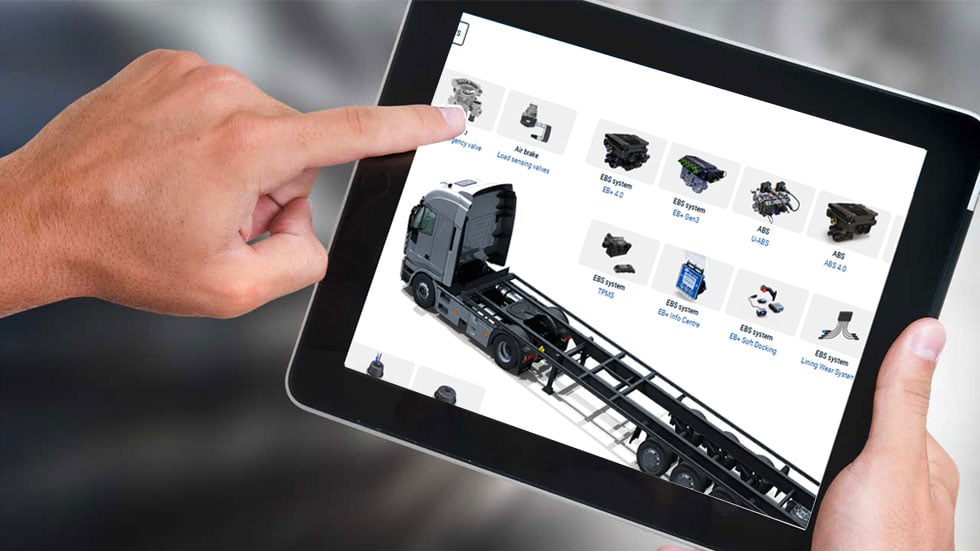
Haldex is making the design and installation of electronic braking system EBS simpler for trailer manufacturers with its new, modular EB+ 4.0 platform. This incorporates several modules which allow for the use of different types of ABS and EBS in both 12- and 24-volt systems. Kraus describes the platform as "future-proof," because its modular design makes it easy to upgrade an ABS to EBS, as the piping, cabling, and mounting positions remain the same.
The EB+ 4.0 platform consists of three main modules: the ECU, solenoid valves, and pressure modulators. These modules are connected to a manifold base. For more advanced functions, including EBS, additional modular components can be added, such as a pressure protection valve, pneumatic auxiliary module, mobiliser, and a spring brake-control module.
The modular approach extends to the software as well. There is basic software for EBS, with additional application layers that can be added for controlling auxiliaries and connecting other devices such as tire pressure monitoring systems (TPMS).
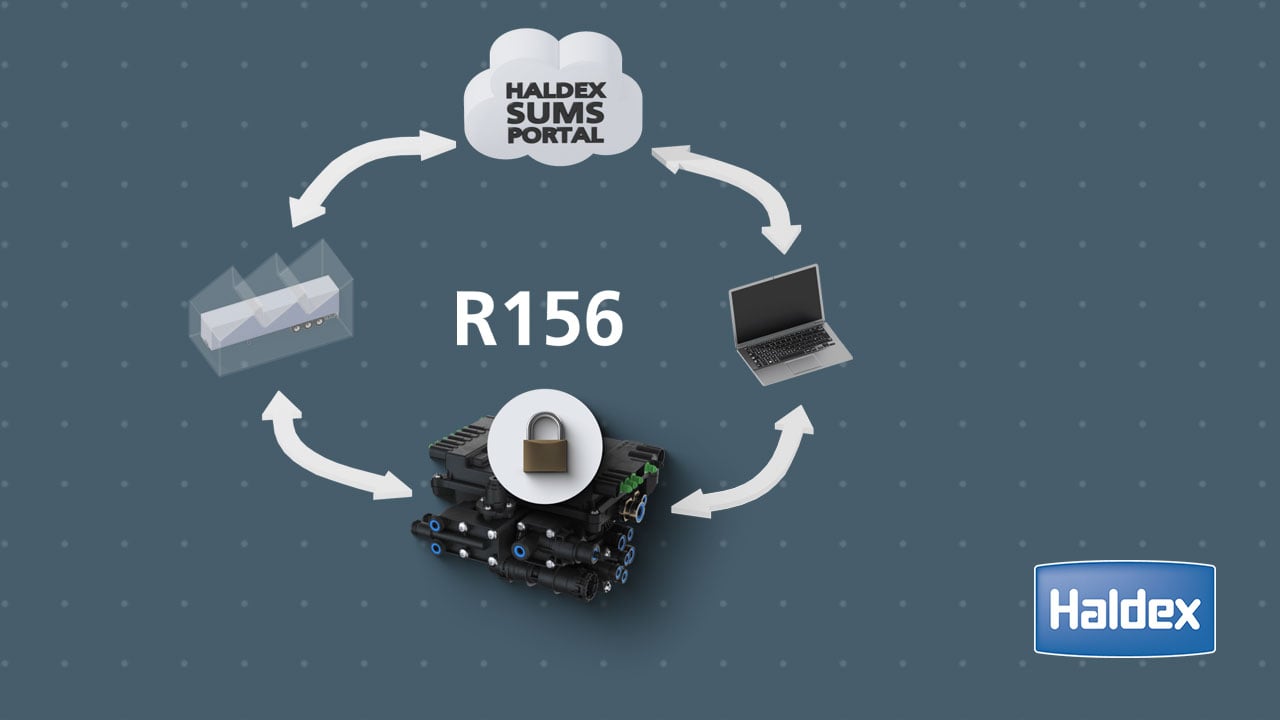
Software is evolving not only to provide new functionality, but also to meet new regulations aimed at improving vehicle safety. Recently the United Nations introduced UN R156, a new regulation aligned with EU 2018/858 that makes the implementation of a Software Update Management System (SUMS) for category O vehicles mandatory.
The regulation includes the necessity to record and secure all software updates that impact Type Approvals, such as ECU software updates, braking pressure setups, and VIN number changes. This measure aims to prevent unauthorized modifications that could compromise vehicle safety or regulatory compliance.
Haldex has developed a SUMS portal which will provide manufacturers with all the necessary control and evidence of software updates applied to their trailers to comply with UN R156.
Haldex also offers a range of additional products that can be integrated with their braking systems, via hardware and software additions to create even more advanced vehicle control solutions. These include Soft Docking for automated assistance when backing up trailers, TPMS 2.0 for real-time tire pressure monitoring, and the Info Centre for displaying critical vehicle information to the user. Other integrable products include the CAN Hub for efficient data sharing between EBS systems, TEM+ for emergency and park braking capabilities, COLAS+ for manual trailer height adjustments, and ILAS-EP for automatic lift axle control within the air suspension system.
By combining modular hardware design with adaptable software and integrated auxiliary systems, Haldex is not only meeting current needs but also preparing for future developments in the industry. As regulations tighten and the demand for smarter, safer, and more efficient vehicles grows, systems like the EB+ 4.0 platform are likely to play an increasingly crucial role in the future of transportation.