An introduction to the Haldex Software Update Management System
Haldex's Software Update Management System launches soon – here's what you need to know
Haldex is launching SUMS (Software Update Management System) in the coming months. SUMS allows OE manufacturers of trailers and trucks, as well as the aftermarket, to implement software updates to Haldex systems seamlessly and easily.
The SUMS platform is being introduced primarily to meet UN regulations R155 and R156 for trucks and trailers. These pieces of legislation – and by extension, SUMS – aim to protect the functionality of increasingly computerised truck and trailer systems from any unintended consequences of updates and from hackers.
The SUMS platform meets these legislative requirements and more, removing the hassle from updates by introducing one seamless portal to manage components and updates.
Why do we need the SUMS platform?
UN R156 requires the recording of all software updates that impact Type Approvals for road vehicles, such as ECU software updates and braking pressure setups for trailers and trucks. R156 applies to all new vehicle types manufactured and brought into use on EU roads in or after July 2024, including trailers.
Haldex's SUMS portal provides all necessary control and evidence of software updates applied to trailers to comply with UN R156. "There are no exceptions. In the future, everyone has to meet R156," says Alexander Kraus, product manager for electronic braking systems at Haldex. "The majority, if not all, of the OEMs are going to add new type approvals in mid-2026, so this is where everyone will be exposed to that on a larger scale."
SUMS prevents any software update from bringing a trailer or vehicle out of type approval.
The SUMS platform has been developed to ISO Standard 24089, ensuring that updates carried out using SUMS meet UN R156's organizational and procedural requirements for the entire software update procedure.
It also ensures that each update meets the minimum standard of documentation required. The documentation must cover the purpose of the update, which systems or functions could be affected, how the update influences the type-approved parameters, how the update is executed, and confirmation information about the verification and validation procedure.
The update process
The latest software updates are sent to OE manufacturers, who approve the updates and ensure they don't compromise other systems. The end user then carries them out.
"This is for safety, to ensure the update does not compromise any functionality," explains Kraus. "There are multiple ECUs across a vehicle and systems from many different suppliers that must communicate with each other. The legislation states that regardless of the update, the ECUs are still required to communicate going forward and not compromise any functionality."
The documentation requirements are comprehensive and must state what systems could be affected and provide detailed verification procedures.
"Our overall approach for developing and introducing SUMS has been to minimise the hassle and remove the hurdles for OEs during the installation and setup process. We want to make it easy for our customers to manage and evidence updates," says Kraus.
The requirement for trailers that are going to be type-approved came into force in July 2024. However, there has been no compliant platform available during the past year –the option to make updates has been disabled since July last year to ensure compliance with regulations.
"The first step was to lock systems so they could not be updated," Kraus explains. "From July last year up to the launch of the SUMS portal, no type approval relevant software updates are possible. The launch of the SUMS platform enables that again, but with all the requirements demanded by the legislation."
SUMS and DIAG++
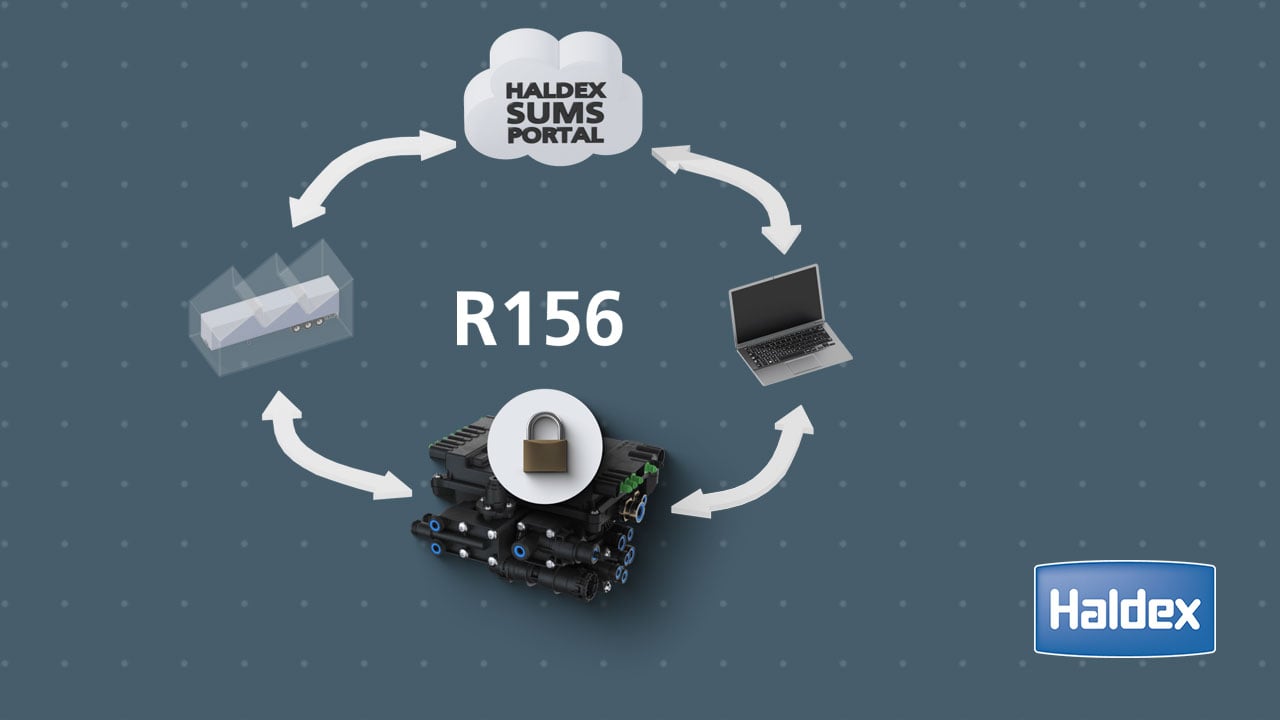
The SUMS portal contains trailer VIN numbers, EBS serial numbers and software level information, as well as devices and update history. This comprehensive tracking system ensures full traceability of all updates made throughout a vehicle's lifecycle.
One half of SUMS is a web portal. The other half is DIAG++, which users may already be familiar with. DIAG++ is an app that runs on a PC to interface SUMS with the trailer to implement and manage updates.
DIAG++ facilitates automatic software updates via the SUMS portal – for instance, checking for available updates for different EBS valves when the valve is connected to the system. An offline mode can store configurations locally so they can be uploaded to SUMS at a later stage. Both configuration and software updates can also be exported so they can be uploaded to SUMS using a different device with an internet connection.
DIAG++ itself must be updated to at least version 3.0 to integrate with SUMS.
Cybersecurity
Another piece of legislation recently introduced that must also be met by all vehicle manufacturers moving forward is R155, which covers cybersecurity.
R155 requires manufacturers to demonstrate the fulfilment of several requirements for cybersecurity when applying for type approvals for road vehicles.
The ISO/SAE 21434 standard serves as the basis to meet R155's cybersecurity requirements. It specifies requirements for the implementation of information security systems and provides guidelines for suppliers and vehicle manufacturers for such systems, so they can perform audits of their Cybersecurity Engineering and Management.
Haldex's SUMS portal aims to meet ISO/SAE 21434 and assigns external users to three levels to manage security: Production users, OE engineering staff, and aftermarket users.
Production and aftermarket users cannot make configuration changes independently – all modifications must be approved by qualified engineering personnel to ensure safety and compliance.
Kraus says, "Everyone registering on the SUMS portal is assigned a particular role. OE Production and OE Engineering users can see all assets, devices and reports connected to that account. Aftermarket users see the data related to the particular device they are working on.. Who is doing what on which device is tracked and documented.
Premium features, training and introduction
Premium features under development include access to and storage of comprehensive service documentation, digital fleet assist for predictive maintenance, and third-party device management capabilities. Haldex is introducing these at a later stage as value-added services. “There will be premium features made available in the future,” says Kraus.
SUMS is going through a period of beta testing with select customers and will launch during the third quarter of 2025.
"We offer training to our internal sales engineers, and they will then train their key account managers and customers," explains Kraus. "We have a two-stage learning, train-the-trainer approach."
For most users, the transition will be seamless. "For most people, nothing changes in terms of the initial configuration process," Kraus notes.
"We have to do this to meet the legislative requirements, but a benefit will be a better understanding of what is going on with the devices in the field going forward. Access to this data, enables us to analyse and optimise the system to further improve our products in the future."
However, Kraus recognises some industry-wide challenges: "The disadvantage is that every ECU manufacturer will have its own SUMS platform equivalent. Dealing with several different diagnostics platforms and portals will be a hassle.
Despite these challenges, the benefits are clear. "Having control of updates is a good thing," Kraus concludes. "Meeting legislative requirements is the minimal viable way to proceed, but the extra features and ease of use will eventually differentiate the platforms."
The SUMS platform represents a significant step forward in ensuring the safety and reliability of increasingly complex commercial vehicle systems while providing manufacturers with unprecedented visibility into their products' real-world performance.